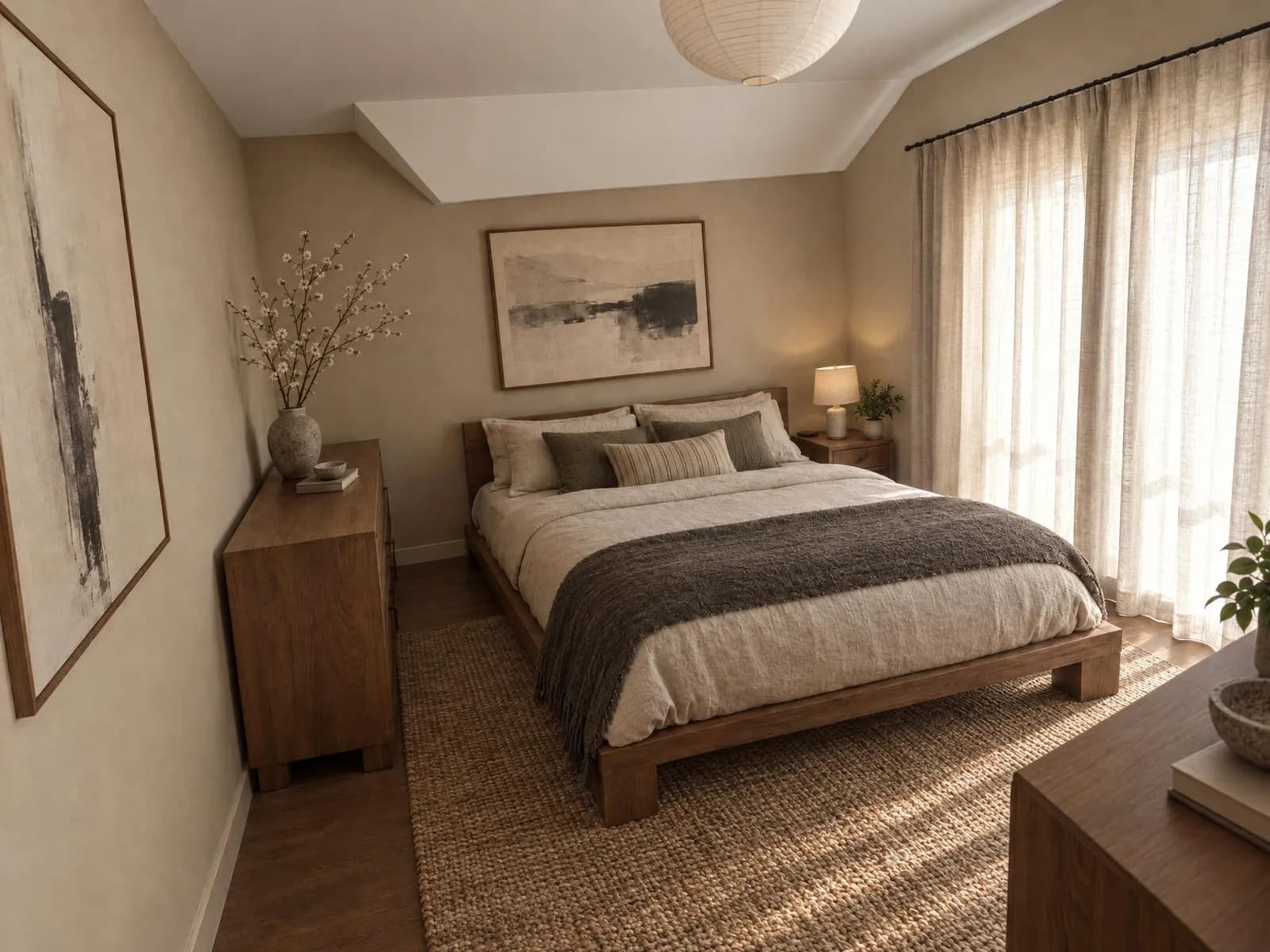
Good coffee bar ideas start with where the bar goes. Your coffee bar needs a free outlet, a surface deep enough for the machine, water within a few steps, and storage that keeps the counter clear. Get those right and a counter end, a sideboard, a rolling cart, a cupboard or a dead corner can all work. If you're not sure yet, start with one tray at the end of the kitchen counter and grow it from there.
Nola Home is an iPhone app that redesigns a photo of your own room in the style you pick, and your first redesign is free.
At a glance
- Best spots
- Counter end, sideboard, cart
- Needs
- Outlet, water, depth, headroom
- On show
- Machine, grinder, daily mugs
- Behind doors
- Refills, spare mugs, filters
- Top mistake
- Shelves right over the steam
Where should a coffee bar go?
Put your coffee bar next to a free wall outlet, close to water, on a surface deep enough for your machine, and out of the path between the stove, sink and fridge. Check these four things before you buy anything.
- Power. Coffee makers, espresso machines and kettles all draw a lot of power to heat water. The Los Angeles Fire Department says to plug only one heat-producing small appliance into a wall outlet at a time. Use an existing outlet, don't stack the machine, kettle and toaster on one circuit, and ask an electrician if you need a new outlet.
- Water. A sink nearby is easiest. Away from the kitchen, plan a routine: fill the machine's tank or a pitcher at the sink each morning.
- Depth and height. Kitchen base cabinets are usually 24 inches deep, and wall cabinets usually hang 18 inches above the counter. Measure your machine with its lid or water tank open, then measure the spot. Measure a sideboard or shelf the same way.
- Heat and sun. The National Coffee Association says to keep coffee out of cabinets near the oven or dishwasher and away from strong afternoon sun. That rules out the shelf above the stove and the sunny windowsill.
Here's how the usual spots compare.
| Spot | Why it works | Check first |
|---|---|---|
| End of a kitchen counter | Water and outlets are already there | It's out of the cooking path |
| Sideboard in the dining or living room | Frees the kitchen, storage below | Depth for the machine, an outlet behind it |
| Hall or landing niche | Space you walk past every morning | An outlet, and room to pass |
| Unused corner | Fits a cart or corner shelves | An outlet within reach of the cord |
| Closet or cupboard | Doors hide it all | Room above the machine for steam |
| Under the stairs | Uses an awkward space | Headroom over the machine |
9 coffee bar ideas for every kind of spot
These ideas for a coffee bar run from a single tray to a whole room. Three come with a real before and after: an ordinary messy spot, photographed on a phone, then redesigned in Nola Home's Coffee & Matcha Bar idea. It's one of the app's Wild ideas, which rebuild the room around the idea. The results come out café-scale, so treat them as idea boards and copy the parts that fit a home.
1. A landing or hall niche
A dead-end landing or a deep hall niche is space you already walk past every morning. If it has an outlet, it can hold a narrow console or two wall shelves and a small machine.
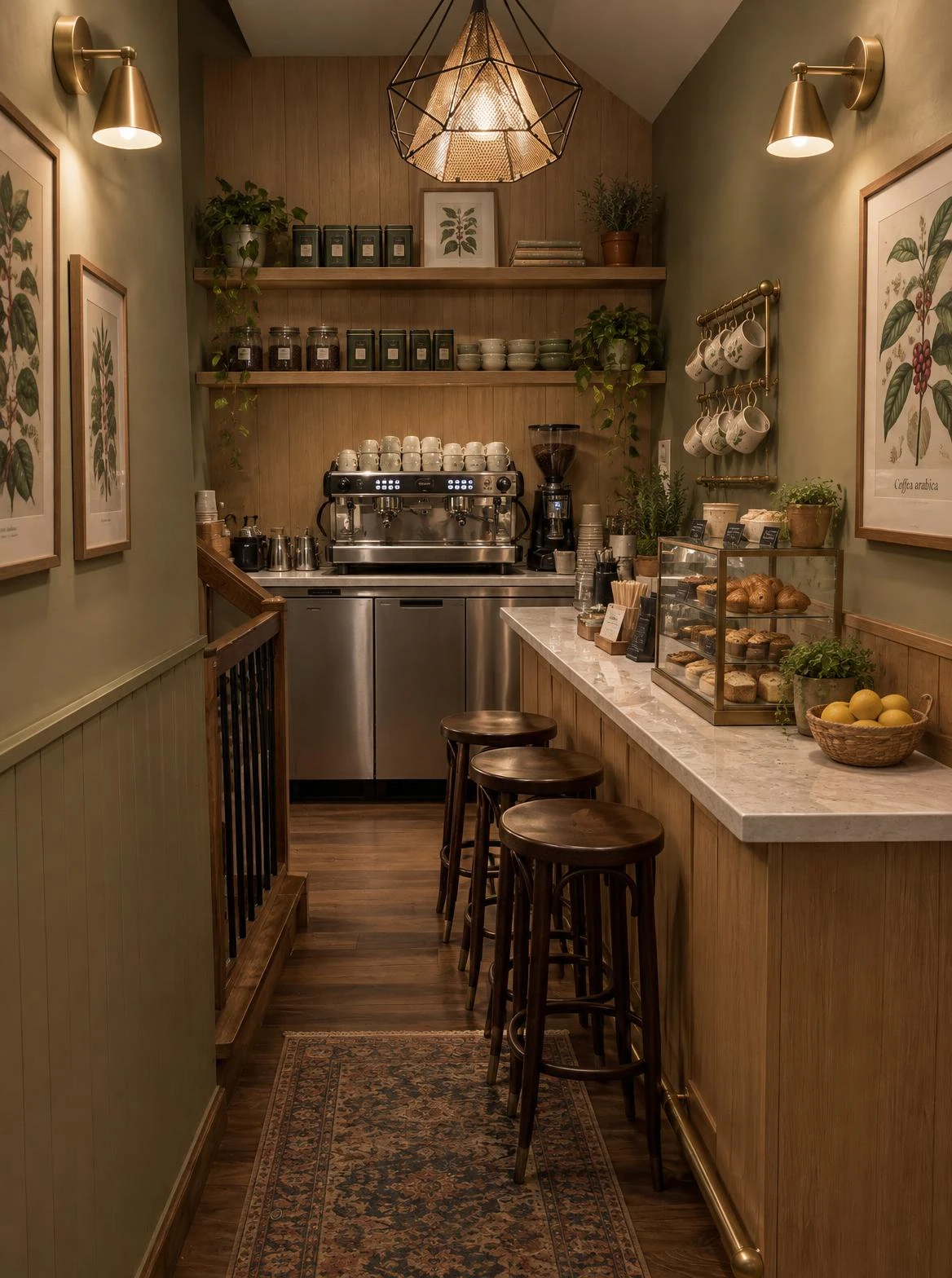
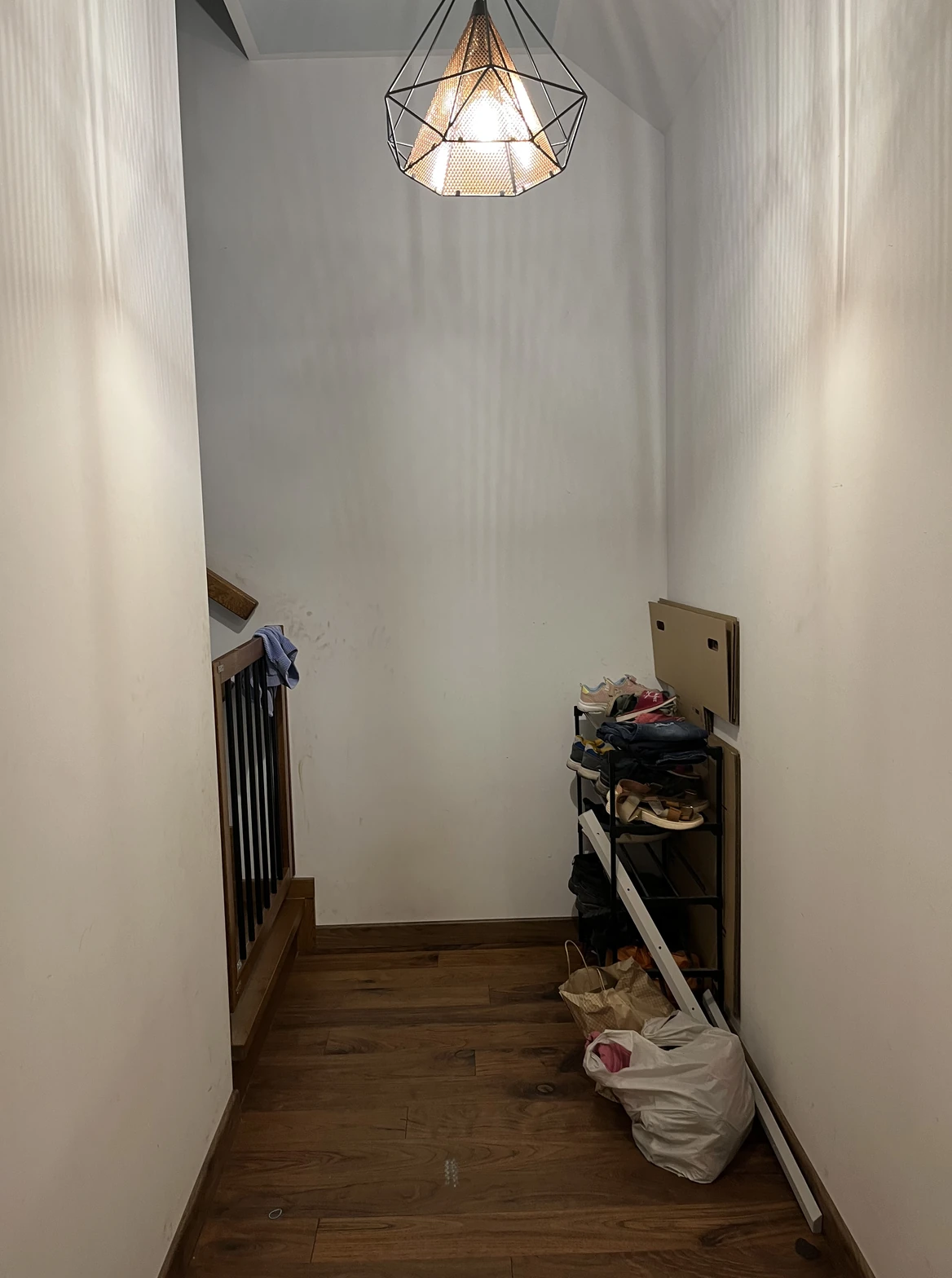
The handrail, the black balusters and the wire cage pendant stay put in this redesign. Here's the home-size version of each piece.
| In the redesign | At home size |
|---|---|
| Long marble counter with three stools | A narrow console or a sturdy wall shelf at counter height |
| Two oak shelves with tins, jars and cups | Two shelves above it: tins on top, mugs below |
| Brass mug rack on the side wall | A rail with hooks, so mugs stay off the counter |
| Two brass wall sconces | Plug-in wall sconces, no new wiring |
| Sage walls and beadboard | Paint just the niche one color, so it reads as its own spot |
| Patterned runner and botanical prints | A washable runner where you stand, and two prints at eye level |
2. A countertop station on one tray
This is the quickest of the kitchen countertop coffee station ideas. Put the machine at the back of the counter and one tray in front of it. The tray holds only daily things: coffee, sugar, a cup of spoons and one or two mugs, and its edge is the border. Anything that doesn't fit goes in a cabinet.
3. A rolling cart
A three-shelf cart is a whole coffee bar on wheels. Machine and grinder on top, mugs and canisters in the middle, refills and filters at the bottom. Pick one with locking wheels, and park it within reach of an outlet: the fire department advice above says to use extension cords only as a temporary fix.
4. A sideboard or buffet bar
A sideboard in the dining room gets the morning coffee out of a busy kitchen. The machine sits on top, and the doors hide refills, spare mugs and cleaning things.
5. A spare room, a cupboard or under the stairs
A box room that has quietly turned into storage, a deep cupboard or the space under the stairs can give one wall to coffee.
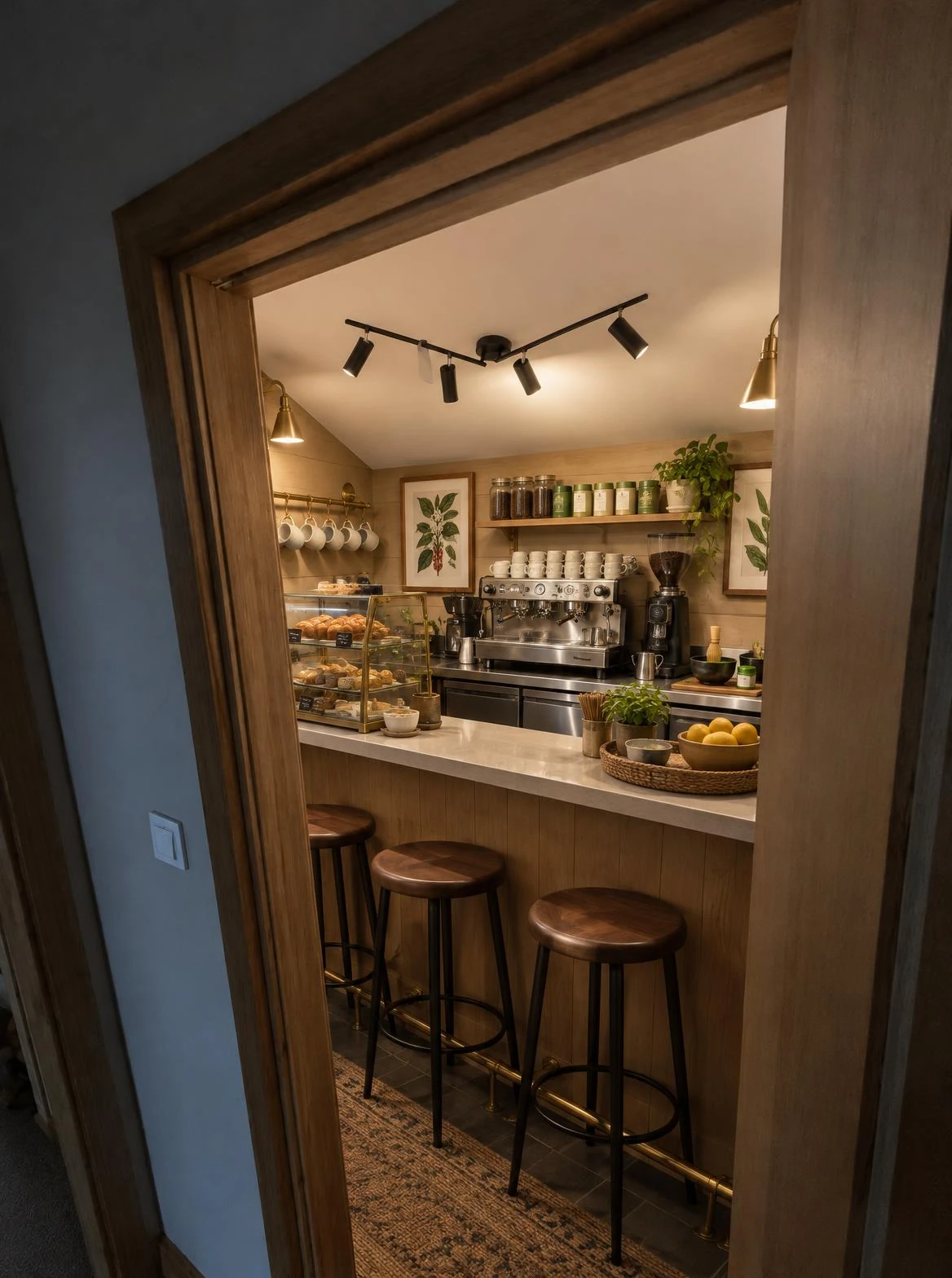
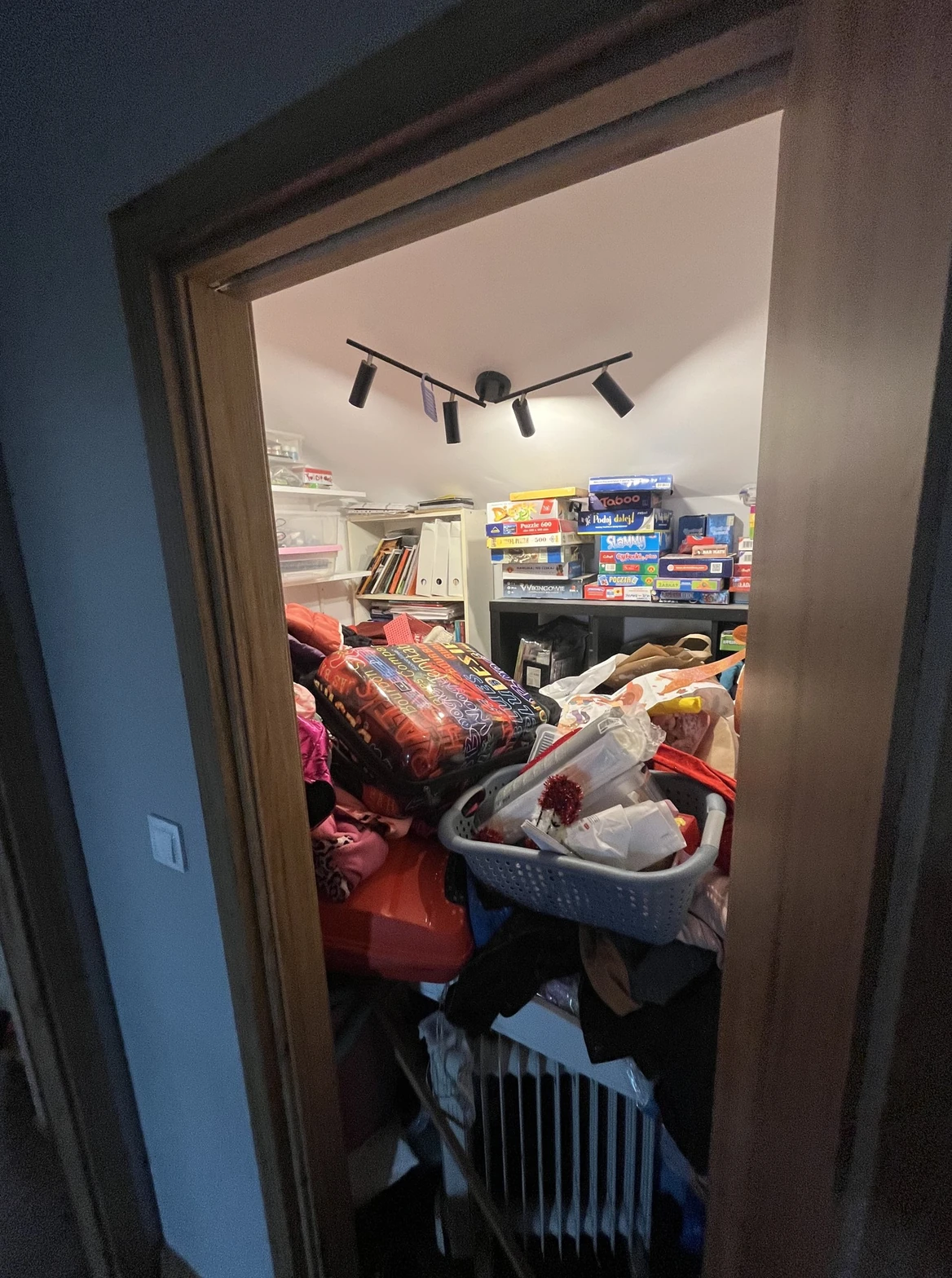
Only the black four-spot track light carries over in this result, and that's the first thing to borrow: if the light you already have can be pointed at the counter, you may not need a new one. The rest, at home size:
- One shelf at eye level for jars and tins, not a wall of shelving.
- A rail of mugs on the side wall, where you reach for them first.
- A woven tray holding the small things, plus a herb pot as the one plant.
- One or two base cabinets with a counter instead of a long bar with stools.
In a cupboard, take out the shelf at counter height and leave the doors open while the machine runs so the steam can get out. Under the stairs, put storage at the low end and the machine at the tall end, and check the headroom where you'll stand.
6. A cabinet with doors
The best coffee bar cabinet ideas let the whole bar disappear when the doors close. A tall pantry cabinet, an armoire or a run of kitchen cabinets with pocket doors all work. Put the machine on a pull-out shelf so you can slide it out before you brew.
If you want the machine to stay inside, ask an electrician about an outlet in the cabinet. Don't feed a cord through a drilled hole.
7. Floating shelves, a mug rail or a pegboard
Two floating shelves turn any bit of wall over a counter or console into a coffee bar. Hang the lower shelf high enough that the machine's open lid clears it, fix heavy shelves to studs, and give each level one job. A pegboard painted the wall color does the same work, and its hooks move as your kit changes.
| Level | What goes there |
|---|---|
| Upper shelf | Spare cups, a plant, one print |
| Lower shelf | Canisters of coffee and tea, sugar |
| Rail under the lower shelf | The mugs you use every day |
| Counter | Machine, grinder, one tray |
8. A coffee corner
Coffee corner ideas work best when the corner holds just two things: a surface and somewhere to sit. Run two shelves into the corner, or use a corner unit, and add a small round table and a chair to make a coffee nook. For a quiet coffee nook, the rules from a Japandi room work well: one wood tone, warm light and very little on display.
9. A coffee and matcha bar
If someone in your home drinks matcha, give it a small zone of its own beside the coffee: a bowl, a bamboo whisk, a scoop and a tin on one small tray. Matcha only needs hot water, so the kettle can sit on the matcha side.
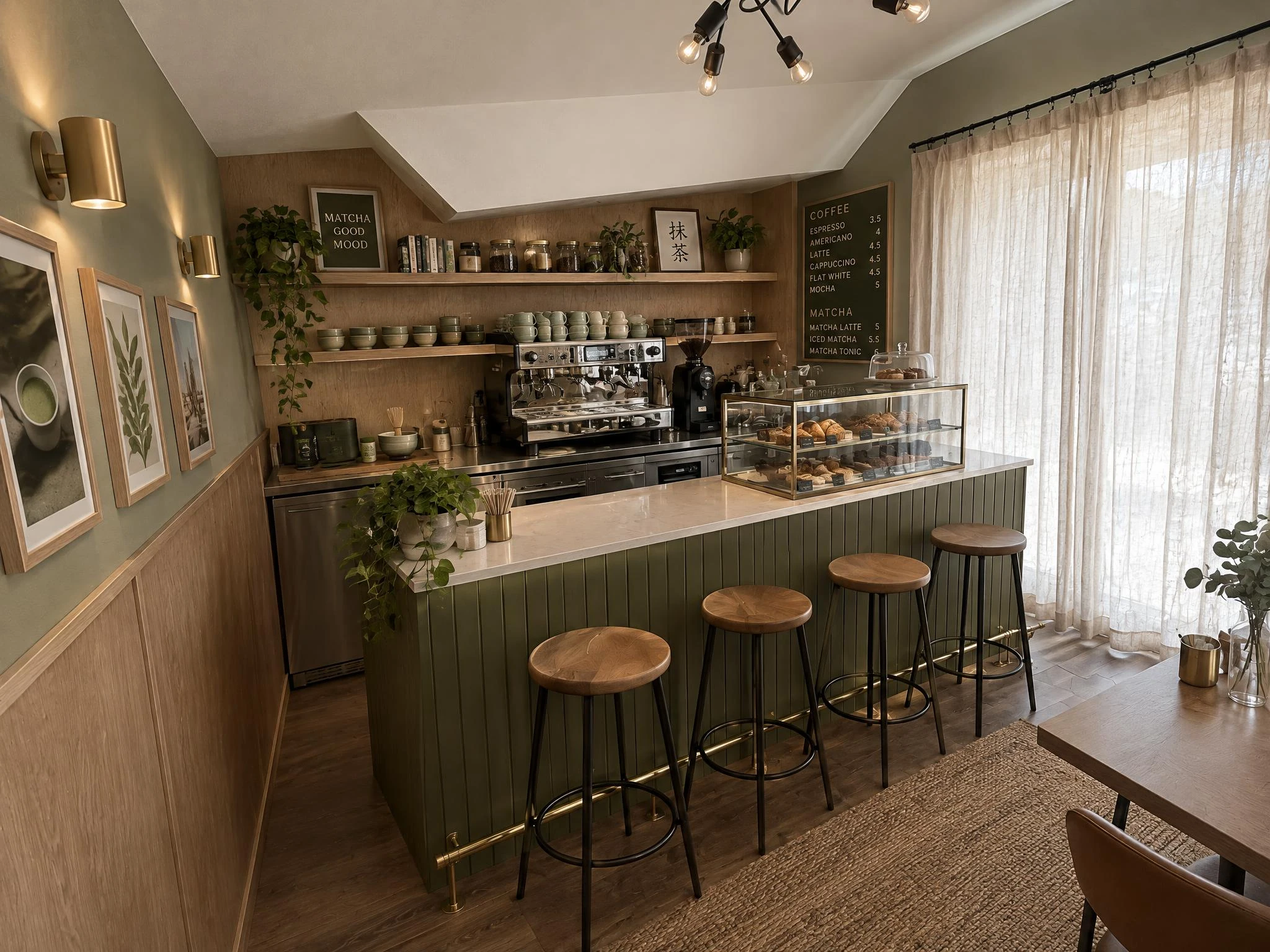
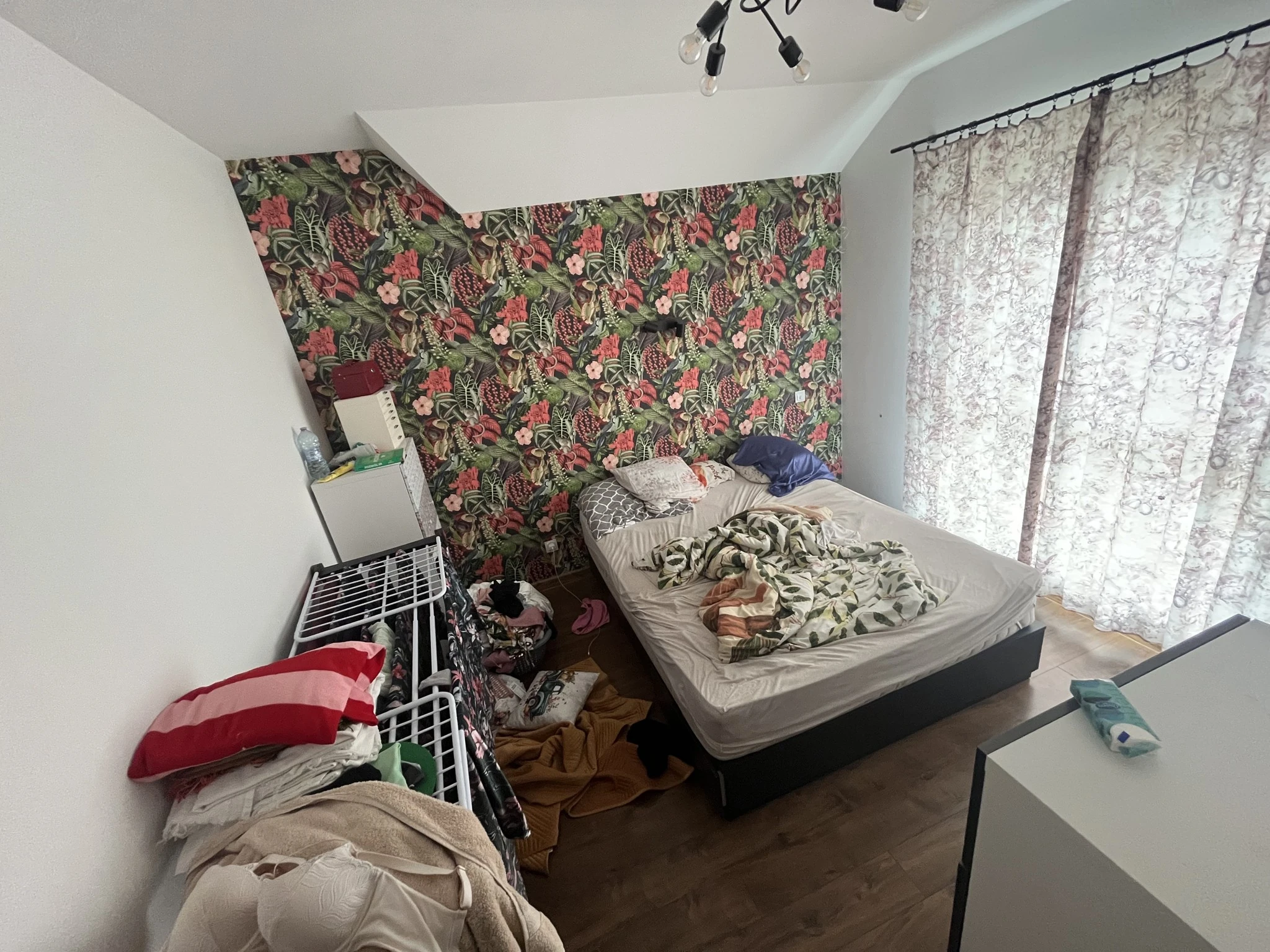
Here the sloped ceiling, the bulkhead and the black multi-arm ceiling light stay. The home-size version is the matcha side: green cups on an open shelf, a framed print of a matcha cup, brass cylinder sconces and a jute rug would suit any coffee corner. The wood table and chair by the window show the nook version: make the drink at the bar, drink it at the table.
What do you need for a home coffee bar?
You need a brewer, a grinder if you buy whole beans, an airtight container for the coffee, mugs within reach and somewhere for used grounds. The rest depends on what you drink.
| What for | Drip or pour-over | Espresso | Matcha |
|---|---|---|---|
| To brew | Drip machine, or kettle, dripper and filters | Espresso machine | Kettle, bowl, bamboo whisk and scoop |
| To grind | Grinder for whole beans | Grinder that can go fine | None, it's already a powder |
| To store | Opaque airtight canister, box for filters | Opaque airtight canister | Small airtight tin |
| For waste | Small bin or compost caddy | Knock box for used grounds | A cloth for the whisk |
| Nice extras | Mug hooks, sugar jar, syrup caddy | Milk jug, a mat to tamp on | Small tray, a cup or bowl to drink from |
Store beans in opaque, airtight tins, and buy only what you'll use in a week or two, as the National Coffee Association recommends. Use clear jars for sugar, tea bags and stir sticks.
How do you make a coffee bar in a small space?
Go up instead of out, give the bar one clear border, and keep only daily things on show. Most coffee bar ideas for small spaces come down to these rules:
- One machine, not three. Keep the one you use every day out, and store the weekend one.
- Go vertical. Shelves and hooks above the counter hold more than extra counter would.
- One tray as the border. If it isn't on the tray, it goes away.
- A closed cabinet or bin for refills. The backup bag of beans and the box of filters live behind a door.
How to style a coffee bar without clutter
Split the bar into three zones, and it stops looking messy even when it's full: make (machine and grinder), store (canisters and mugs, ideally on shelves above) and serve (a tray with sugar, spoons and today's cups).
Then decide what earns a place on display.
| Show | Hide |
|---|---|
| The machine you use every day | Refills, backup beans and filters |
| Mugs you like looking at | Chipped and spare mugs |
| One plant, such as a herb pot | Cleaning tablets and descaler |
| One print or small sign | Cords, as far as you can |
Light makes the biggest difference for the least money. A plug-in wall sconce or an under-shelf light with a warm bulb turns the bar into a spot you notice in the evening, with no hardwiring.
For modern coffee bar ideas, keep it plain: flat cabinet fronts, one metal finish for the hooks and lights, and one wall color behind the bar. Sage, olive and oak with brass, like the results above, is one calm palette that works.
Coffee bar mistakes to avoid
Most coffee bars that don't work fail for one of these reasons.
| Mistake | What goes wrong | The fix |
|---|---|---|
| No outlet nearby | Extension cords across the floor | Choose a spot by an outlet, or have an electrician add one |
| Machine, kettle and toaster on one outlet | Overloaded outlet and tripped breakers | One heat-producing appliance per outlet |
| Counter too shallow or too low | The machine hangs over the edge or the lid hits the shelf | Measure depth and height, lid open, before you buy |
| Everything on display | It looks cluttered and collects dust | Daily things out, the rest behind doors |
| A shelf, mugs or a cabinet right above the steam | Steam lands on the shelf and the mugs above it | Keep the space above the machine clear, or pull it forward to brew |
| The bar in the cooking path | You're in the way of whoever is cooking | Use a counter end or move it to another room |
| Beans in clear jars on a sunny sill | Light and heat dull the coffee | Opaque tins in a shady spot |
See a coffee bar in your own room first
Pick your spot with the four checks at the top, and photograph it straight on, mess included. In Nola Home, choose Coffee & Matcha Bar and ask for a mug rack and open shelves. When the redesign comes back, check that the counter you picture would fit beside your outlet with room above the machine, then copy the shelves, mug rail and colors at home size. Your first redesign is free, and the guide to trying a free AI room redesign walks through how it works.